
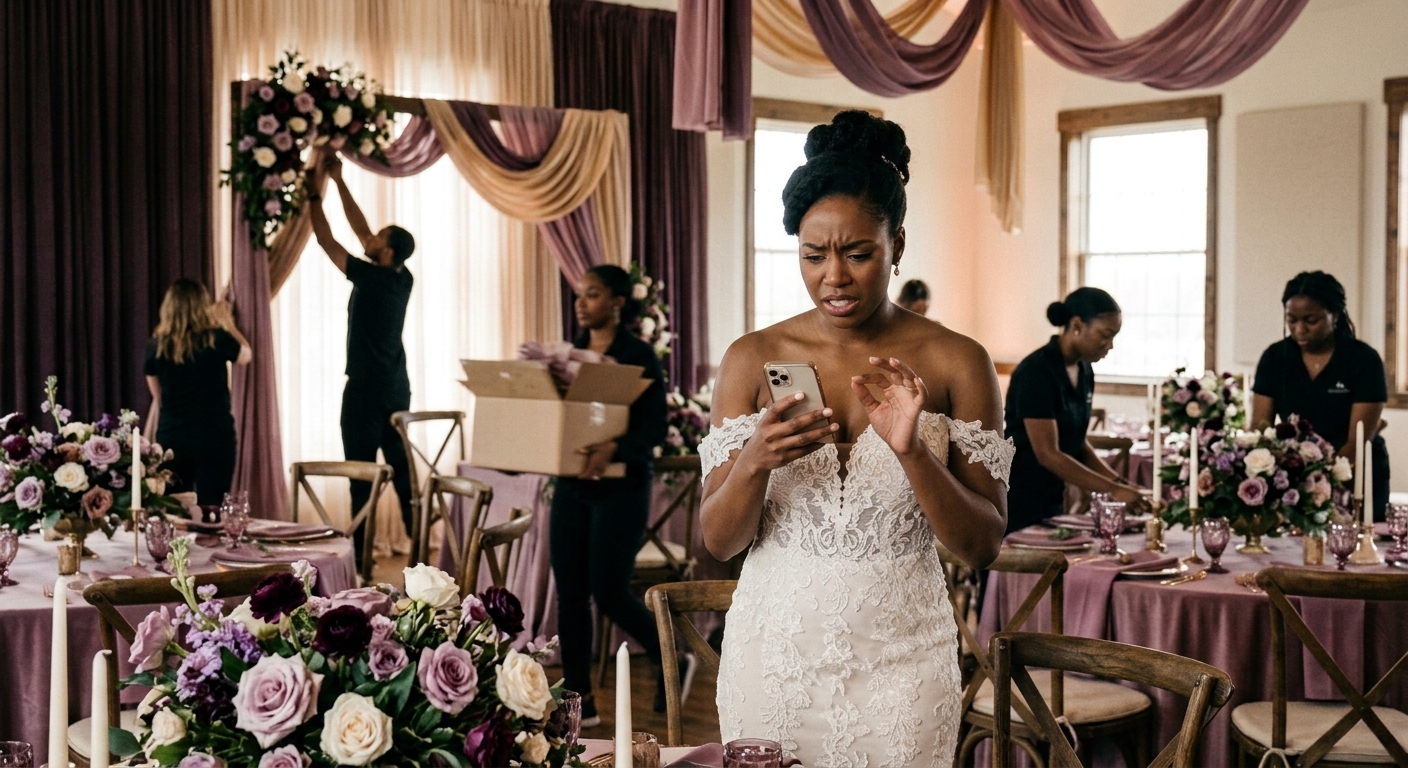
There's something special about watching an idea come to life. You picture how everything will look, how the day will unfold, and how people will feel when they experience what you've put together.
I've always loved that process. Planning, organizing, and bringing ideas to life have always come naturally to me.
So when it was time for my own wedding, I decided to handle the planning and coordination myself.
I wanted to see everything come together just as I'd envisioned it.
And eventually, it did.
But there was something I hadn't fully considered: what it would feel like to be the person responsible for making sure everything came together while also being the person the day was meant to celebrate.
When You're the Host and the Planner
My wedding day arrived, and instead of being fully present, I spent much of my time managing timelines, solving problems, and making sure things stayed on track.
I was thinking about what needed to happen next, whether things were going according to plan, and what needed my attention.
I had put so much thought into creating a beautiful day that I hadn't adequately prepared for the experience of actually living it.
It was stressful.
Looking back, that experience taught me an important lesson about event planning: a successful event isn't just about how well everything comes together. It's also about whether the person hosting it gets to enjoy the moment.
You can have beautiful décor, a carefully planned programme, and all your vendors in place, yet still find yourself spending the entire day managing the event.
And when the event is your wedding, a milestone birthday, your child's christening, or a celebration you've spent months looking forward to, that's a lot to miss.
A Beautiful Event Needs More Than a Beautiful Setup
When people think about event planning, they often start with the visible details.
The venue. The colours. The flowers. The tablescape. The entertainment.
These details matter. They help create the atmosphere and bring the vision to life.
But there's another part of planning that deserves just as much attention: what happens behind the scenes.
Who confirms that the vendors are ready?
Who knows when the programme should begin?
Who handles an unexpected delay?
Who makes sure the right people have the information they need?
And who deals with the small problems that inevitably arise without requiring the host to stop what they're doing?
These questions might not be the first things you think about when planning an event, but they can make a significant difference to your experience on the day.
Good planning considers both the event itself and the people who will experience it.
Three Lessons to Take Into Your Next Event
Whether you're planning a wedding, a birthday party, a corporate gathering, or a family celebration, there are three things I'd encourage you to consider.
1. Plan the Experience, Not Just the Event
Start by asking yourself what you want the day to feel like.
Do you want to spend time with your guests? Enjoy the programme without watching the clock? Take photographs without worrying about what is happening elsewhere? Be fully present for the important moments?
Your answers should influence how you plan.
If being present matters to you, your plan needs to make room for that. It shouldn't leave you responsible for managing every detail from beginning to end.
2. Give Every Important Responsibility an Owner
A timeline is useful, but a timeline alone doesn't make an event run smoothly.
Someone needs to know who is responsible for each key task, when it should happen, and what to do if something changes.
Before the event, confirm responsibilities with your vendors and team. Make sure the people involved understand the schedule, know who to contact, and have the information they need.
If you're handling the planning yourself, identify someone reliable who can oversee agreed responsibilities on the day.
The aim is to avoid becoming the default person for every question and every problem.
3. Make Room for the Unexpected
Even with careful planning, things don't always happen exactly as expected.
A vendor might arrive later than planned. A programme item might take longer than anticipated. A small detail might need to be adjusted.
This doesn't automatically mean the planning has failed.
Build reasonable flexibility into your schedule, communicate clearly with the people involved, and decide in advance which issues require your attention and which can be handled by someone else.
A good plan gives you direction while allowing room to adapt.
You Deserve to Experience the Day You've Planned
My wedding experience changed how I think about celebrations.
I realized that no one should have to choose between bringing their vision to life and being present enough to enjoy it.
That realization inspired the birth of Da.Veeda.
I wanted to help people create meaningful celebrations without carrying the weight of every detail themselves. I wanted them to have the freedom to enjoy the moments they'd spent so much time preparing for.
Because when you look back on an important occasion, I hope you remember more than how the venue looked or whether the programme ran on time.
I hope you remember the conversations, the laughter, the people who showed up for you, and how it felt to be there.
The details matter. The planning matters. But so does your experience of the day.
As you plan your next celebration, ask yourself one question:
Am I planning a day that looks the way I want it to, or am I also planning a day I can genuinely enjoy?
The best plans make room for both.
Da.Veeda — The Event Specialist
Thoughtfully planned. Meaningfully celebrated.